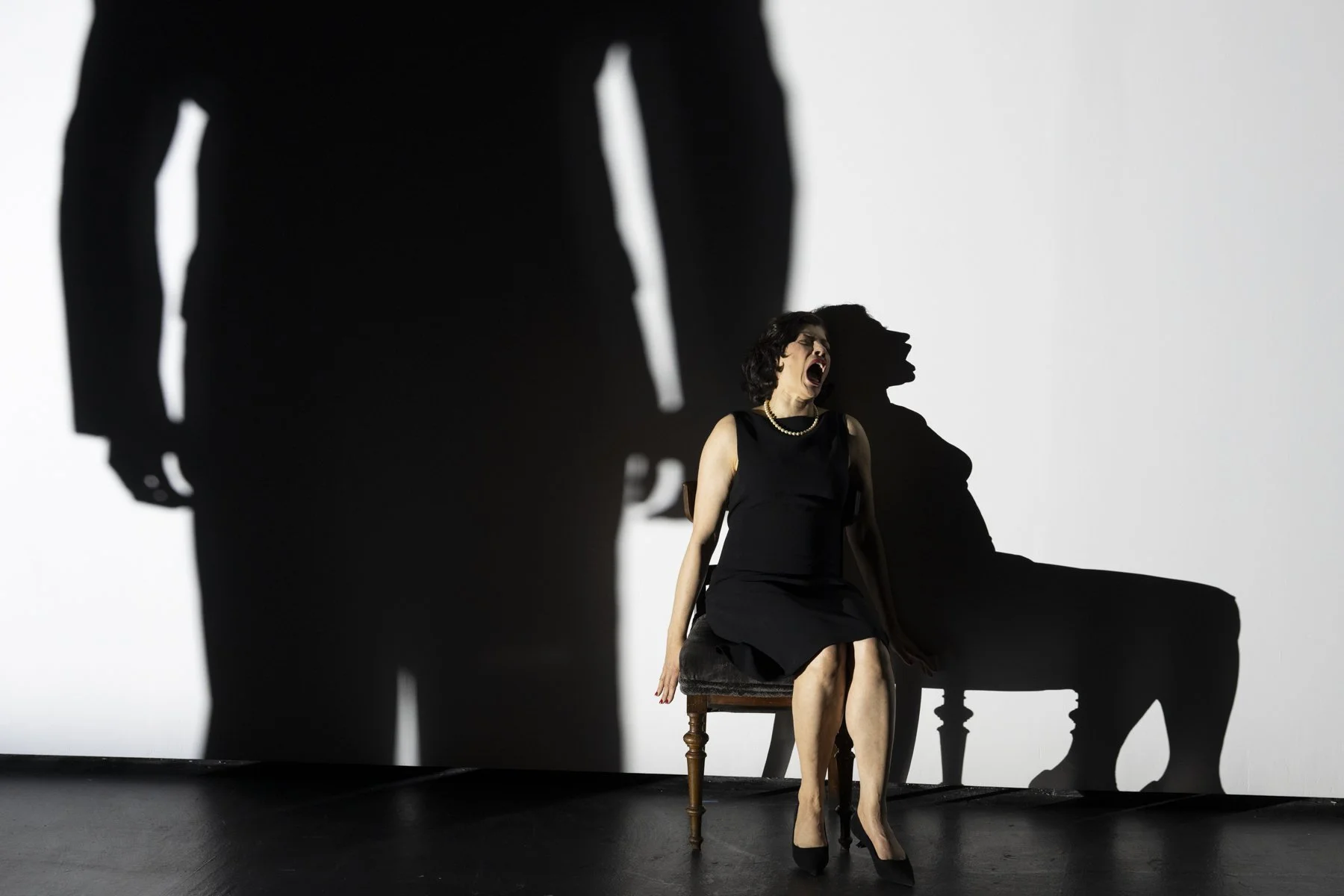
REVIEW: Barber's Vanessa Emerges From the Shadows
Above, Inna Dukach as Vanessa. Photo by Russ Rowland.
May 20, 2026
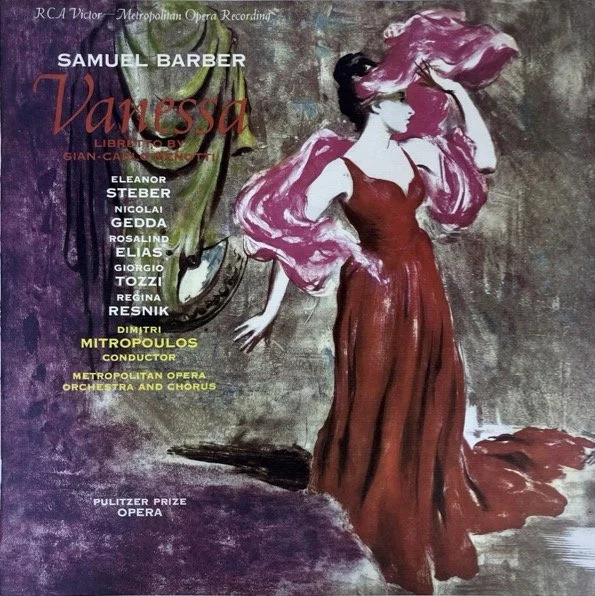
Heartbeat Opera has triumphed again. Jacob Ashworth, artistic director of this inventive opera troupe, applying the company’s winning formula, has streamlined and invigorated Samuel Barber’s Vanessa, and found a new audience for it in the process. Originally presented last summer at Williamstown Theatre Festival, Heartbeat’s riveting production brings this mid-century masterpiece back to Manhattan. Vanessa’s milestone Metropolitan Opera premiere in 1958 earned its composer the Pulitzer Prize for music, but it has scarcely been revived.
Ashworth’s shrewd adaptation transforms the piece into a chamber opera — eliminating the chorus and two minor characters, for a total of five cast members, and reimagining Barber’s angsty Neo-romantic score for seven instrumentalists, skillfully orchestrated by Dan Schlosberg. Director R. B. Schlather further tightens the lens with a crisp, minimalist blackbox production that intensifies the opera’s psychological underpinnings.
The libretto was devised by Gian-Carlo Menotti, who knew the operatic medium as well as anyone — his own comedy Amelia Goes to the Ball succeeded at the Met some twenty years earlier. He also knew Sam Barber as well as anyone. The two of them composed in opposite wings of Capricorn, the home they shared in Westchester County. Menotti’s drawing-room love-triangle drama seems strategically engineered to generate maximal response from Barber’s music.
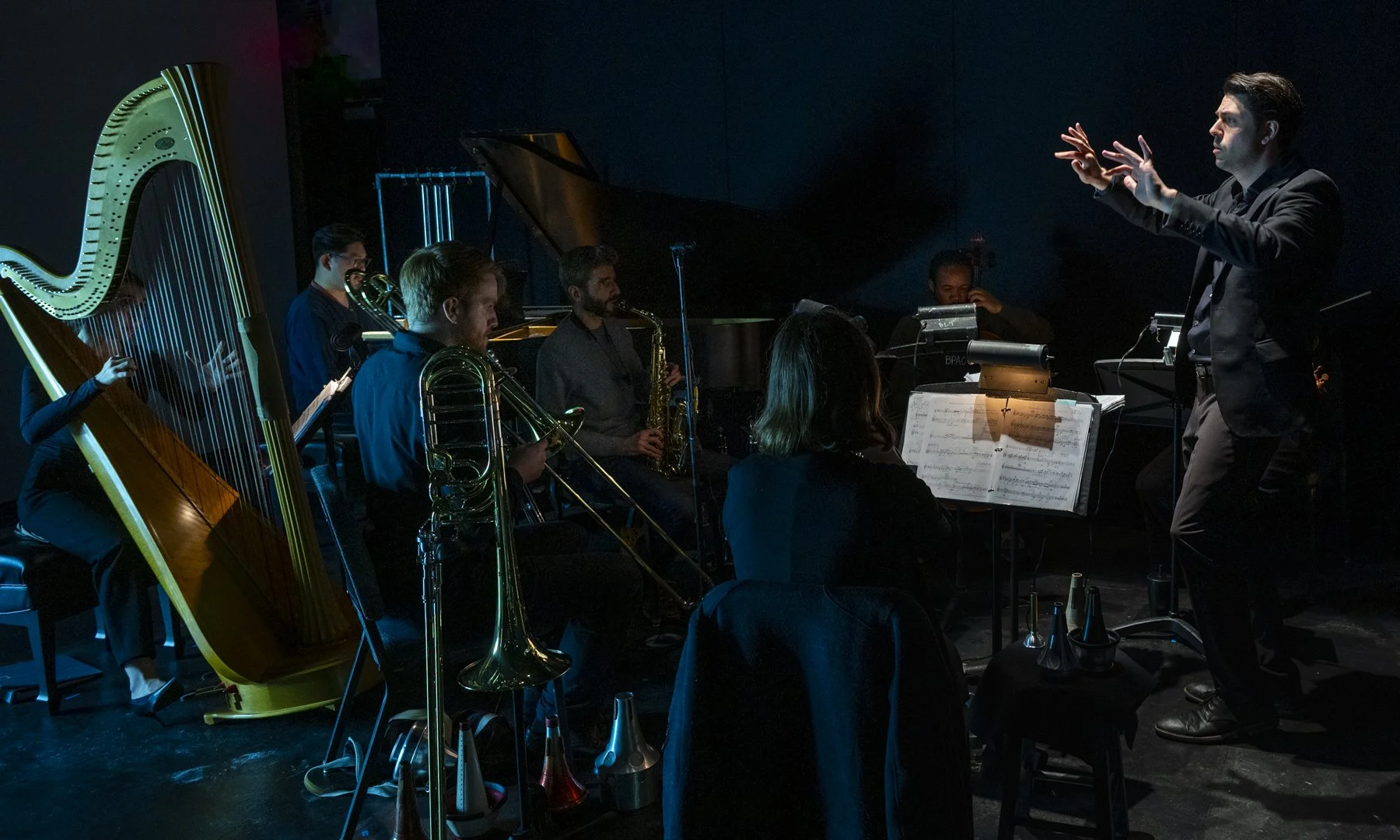
Jacob Ashworth conducts Vanessa. Photo by Russ Rowland.
That music — nervous, captivating, and ultimately supremely affecting — is realized quite successfully in Schlosberg’s inspired use of limited means. Under Ashworth’s baton, the virtuosos of the orchestral septet are each playing a concerto’s worth of material, and Schlosberg mines the piece’s subtext for instrumental effects. The trombonist conjures a noble French horn one moment, a painful cry the next. A platoon of trumpet techniques supplies tonal variety, and you would never believe there are only two string players. Some double on percussion, as well, but where the reduction (and cuts) sacrifice some of Barber’s coloristic depiction of the vaguely Scandinavian atmosphere, it intensifies the narrative’s boiling points.
Inna Dukach humanizes Vanessa’s desperation and self-deception, and navigates the title role’s athletic vocal lines with surrender. This is rapturous singing, but Vanessa’s niece, Erika, gets the more luscious aria, Act I’s “Must the Winter Come so Soon?”— surely a reason Maria Callas declined the role of Vanessa, meant for her. Kelsey Lauritano inhabits the character — perceptive yet emotionally frozen, unable to to escape the gravitational pull of the older generation. And as the Baroness, the opera’s third substantial female part, Wagnerian Mary Philips brings three dimensions — and crystalline diction — to a tricky role that Menotti described as a “sullen Greek chorus.”
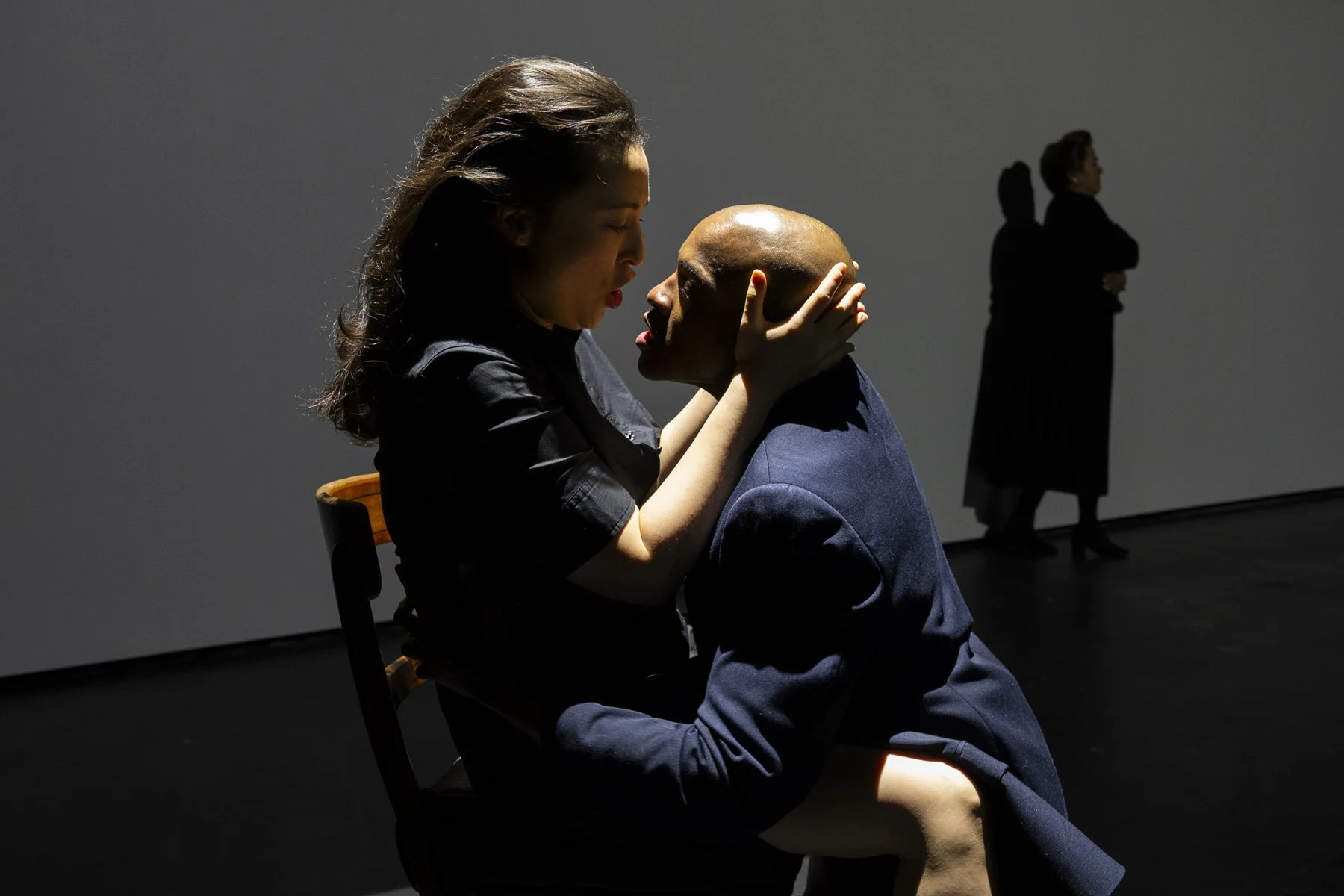
Kelsey Lauritano and Freddie Ballentine in Vanessa. Photo by Russ Rowland.
Is the perplexing character of Anatol an irredeemable cad or a symbol of passivity, of moral ambiguity? As performed by the vivacious Freddie Ballentine, he seduces the entire room, not just the yearning aunt and susceptible niece. As the Doctor, who drunkenly sings of his own fallibility, Joshua Jeremiah is earthy and grounded.
The original setting’s shrouded mirrors are here represented abstractly, stark blacks and whites. Yuki Nakase Link’s strong lighting design brings surgical insight to the characters’ inner turmoil. Looming shadows, like apparitions from nightmares, haunt the stage.
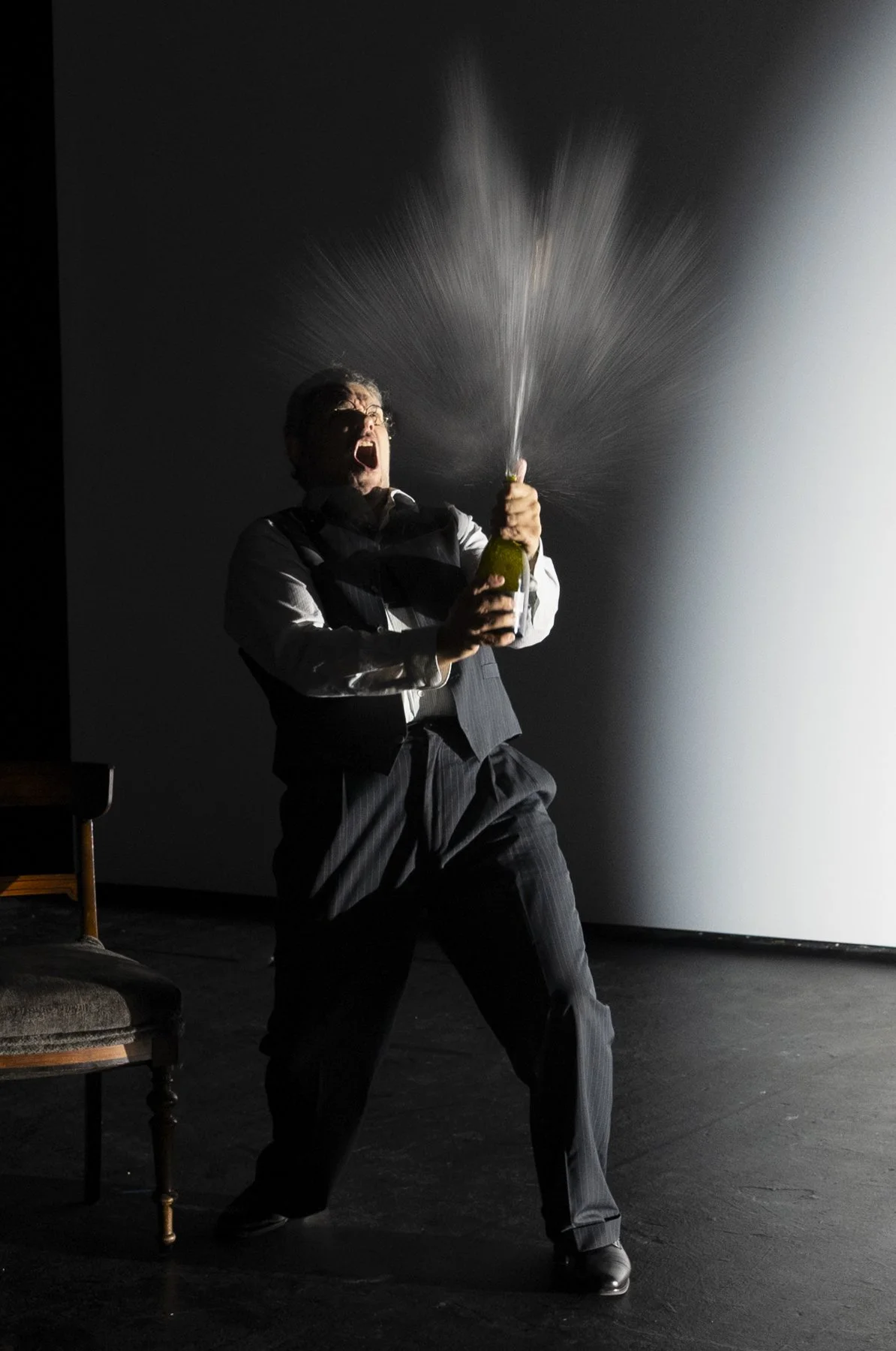
Joshua Jeremiah in Vanessa. Photo by Russ Rowland.
Schlather’s production harnesses the opera’s devastating tension — that of Barber’s highly effusive music reflecting characters that are stuck, ambivalent, and deluded. The tension between Vanessa and Erika, and in Erika’s devolution to Vanessa’s condition, the recurring pattern of her fate. Echoes of Chekhov and Bergman permeate; the ghost of Bette Davis is in the room, but we never ascend into ‘camp.’
The opera’s climactic quintet (“To leave, to break”) — a contemplation of departure, loss, hope, memory — brings all of this tension to the brink of eruption. The action freezes and a five part canon ensues, dripping with painful nostalgia and regret. Encapsulating the opera’s essence, each of the characters is isolated in their own reality, yet overlapping and intertwined.
Heartbeat’s adaptation, having excised much of the libretto’s quotidien minutiae, makes a bold move as Erika sinks into her fate, inserting a momentary reprise of her first act aria. Some of the details (the wine, the draping of the mirrors, etc.) are left to our imaginations, but inexorably, heartbroken Erika assumes Vanessa’s role, “Now, it is my turn to wait.”