REVIEW: Poulenc and Sondheim, Side by Side by Side
April 7, 2026
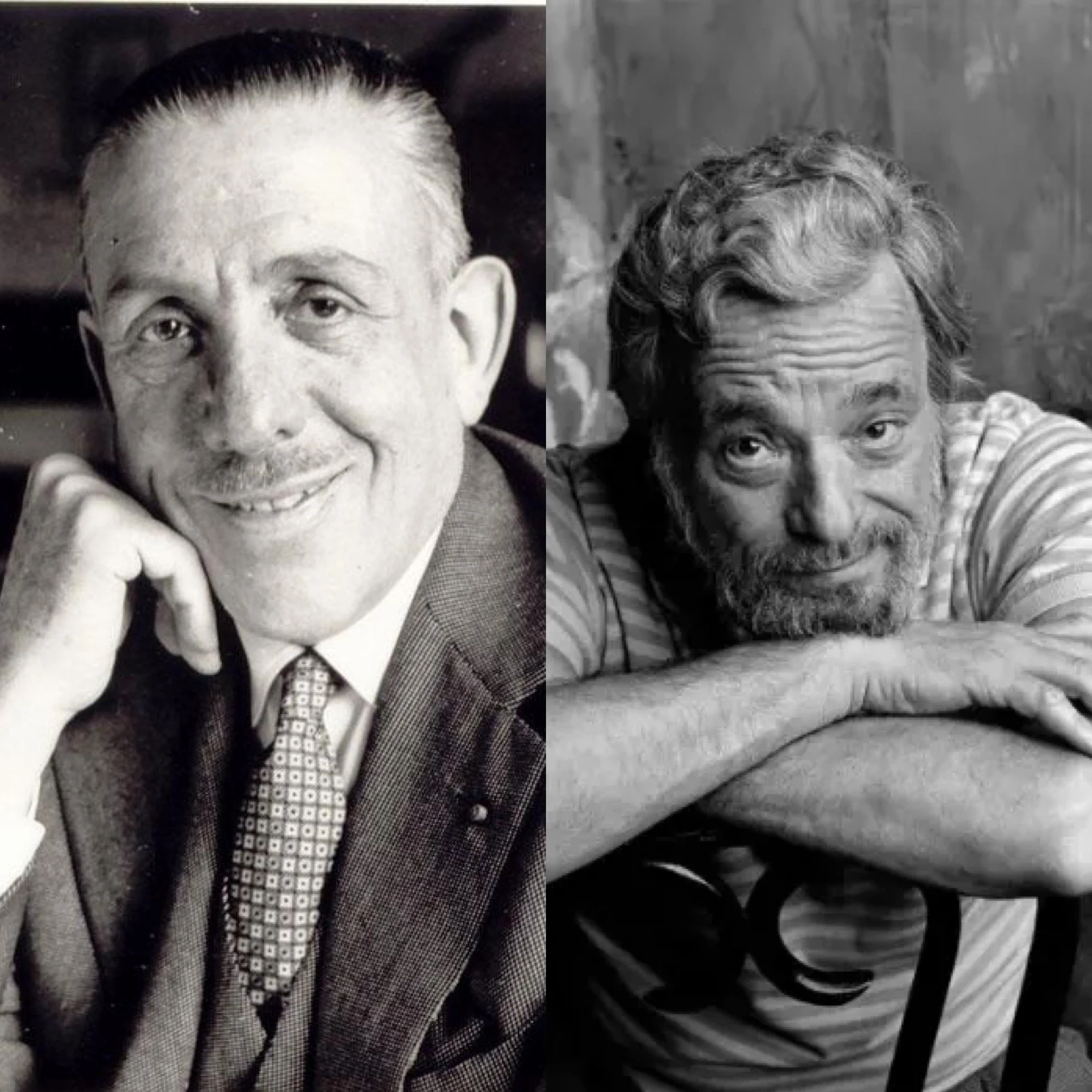
In 1959, Stephen Sondheim was still in his twenties, writing lyrics for Gypsy, while sixty year old Francis Poulenc saw the premiere of his La Voix humaine (which the New York Philharmonic will perform this month) and gave his final recital with Pierre Bernac. These were composers from different generations, but they had much in common.
Among their shared traits was an ambivalence about their homosexuality. Both dabbled in opposite-sex relationships of sorts, Sondheim with Mary Rodgers and (it has recently emerged) Mia Farrow; Poulenc with a woman named Freddy (with whom he had a daughter, Marie-Ange).
Another mutual quality — as Steven Blier, artistic director of New York Festival of Song, put it while introducing Poulenc/Sondheim at Kaufman Music Center’s Merkin Hall — was an “anality” about setting text to music.
Countless songs emerged from the pens of these two men — Poulenc, one of the twentieth century’s most prolific composers of French mélodies, and Sondheim, lauded composer and lyricist of American musical theatre — but on the surface, their songs serve different purposes. Poulenc’s art songs were settings of post-symbolist, often surrealist poetry, accompanied by piano, and performed in a classical recital setting. Sondheim wrote character-specific one-act plays in the tradition of Oscar Hammerstein II, designed to be acted more than sung.
But their work is joined at the root; Sondheim was highly influenced by the same French composers that molded Poulenc, and perhaps to a degree, by Poulenc himself. Sondheim bequeathed his collection of 12,000 LP records to the Library of Congress, catalogued on 4 x 6 type-written index cards filed by composer — Chopin, Rachmaninov, and Prokofiev each filled 18 cards, Hindemith and Stravinsky 17, Debussy 16, Milhaud 15, Ives and Shostakovich 14. Britten, Liszt, Poulenc, Ravel, and Vaughn Williams each filled 13.
He often made clear that Ravel was his favorite composer, but particularly striking is his collection’s representation of Milhaud, Poulenc’s compatriot member of Les Six. Sondheim remarked, “What I like about that whole group of composers — Milhaud, Françaix, all those people, and Poulenc (although he is far superior) — is the kind of bubble and joy and — there must be a fabulous French word for it — joie de vivre.” *
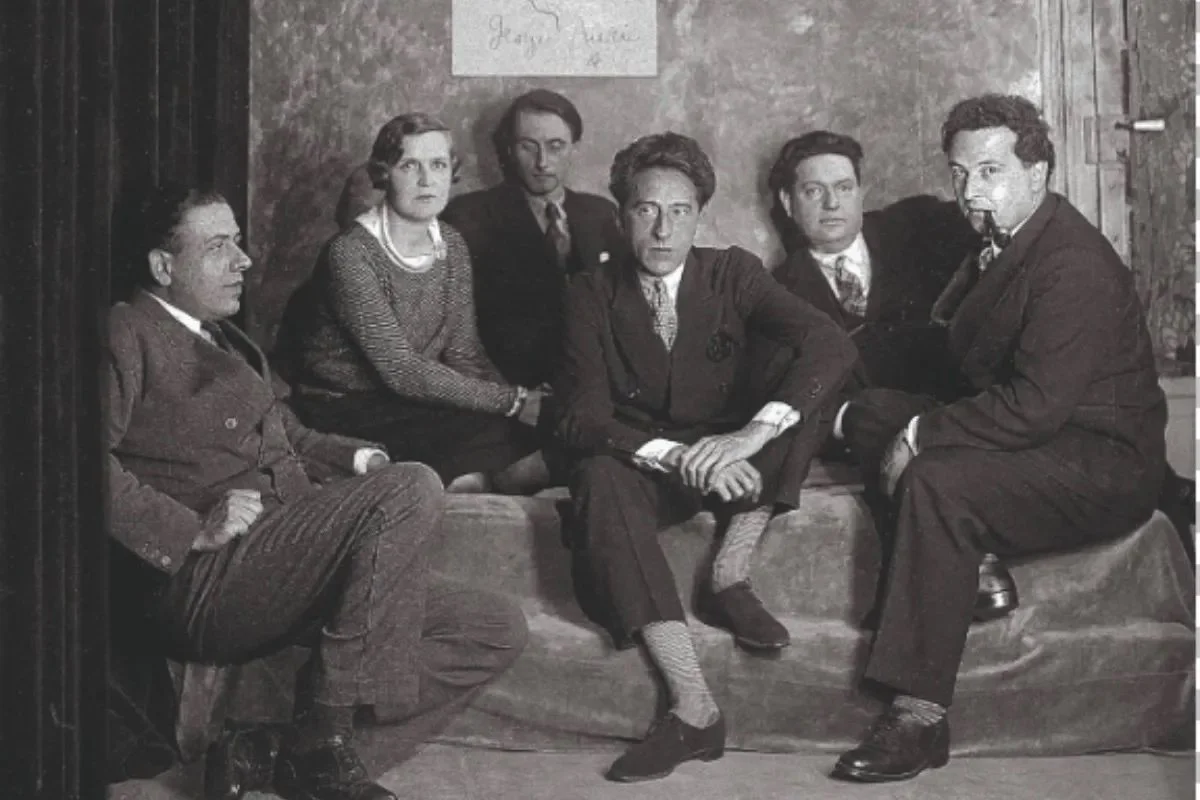
Les Six
Blier and his skilled cast, soprano Christine Taylor Price, baritone Theo Hoffman, and pianist Bénédicte Jourdois, structured their program thematically, linking the composers’ songs in pairs connected by ideas alternately obvious and obscure. The result was fascinating and enjoyable — if over-reliant on some of Sondheim’s most familiar hits.
The singing was superb. Blier’s insightful, droll commentary would have been worth the price of admission alone. Themes connecting the showtunes and mélodies included “aggressive” New York City versus “passive-aggressive” Paris (Blier’s witticism): Price’s spunky “What More Do I Need?” followed by Hoffman’s sensuous “Montparnasse.” Drinking songs: Hoffman, bottle in hand, with a brash “Chanson à boire,” followed by Price’s “The Ladies Who Lunch,” in which the two pianists danced a delicious bossa nova.
Solitude was contemplated in the rarely heard “Live Alone and Like It,” a Sondheim contribution to the film Dick Tracy, and Poulenc’s “Hôtel.” The lives of painters: “Pablo Picasso” (Blier calls this Poulenc’s “butch” style) led into “Finishing the Hat.” Poulenc’s operetta-like duet between an unhappy couple, “Colloque,” didn’t quite connect to Sondheim’s “Move On” as directly.
The correlation between “Air champêtre” and “That’ll Show Him” was even less clear. But, a duo piano rendition of Sondheim’s theme from the 1974 movie Stavisky, about a French political scandal, segued effectively into Poulenc’s “Le Disparu,” about a prisoner of war. Finally, “No One is Alone” and “Priez pour paix” both plea for peace, a solemn and timely conclusion.
Perhaps the most Poulenc-like of Sondheim’s pieces was “Silly People,” cut from A Little Night Music, as fervently sung by Hoffman. The evening’s pinnacle may have been the composers’ only settings of Shakespeare. Poulenc’s “Fancy,” with its charmingly flawed English scansion, exquisitely sung by Price, was followed by Hoffman’s smoldering account of “Fear No More,” from Sondheim’s The Frogs. An earlier highlight was the pairing of Poulenc’s “C'est ainsi que tu es,” a tender declaration of love, with Anyone Can Whistle’s “With So Little to be Sure Of,” one of the two Sondheim songs played at his own memorial service.
Price’s gleaming lyric soprano — long-lined and vowel-soaring in French, crisply clear in English — was inviting and never cloying. Hoffman’s sumptuous baritone served the dramatic storytelling in each song. An entirely different program could be assembled to address the composers’ musical kinship, in particular their frequent use of pastiche as a vehicle for irony. But Blier’s curation was less ‘in the weeds’ — this was a fusion of Poulenc’s and Sondheim’s sonic outlook on the world, and a celebration of the universal language of melody.
***
* Personal communication with Steve Swayne, quoted in: Swane, How Sondheim Found His Sound (Ann Arbor: University of Michigan Press, 2005), p. 21.