REVIEW: Music for More Than 18 Musicians
Saturday, October 18, 2026
Steve Reich is celebrating his 90th birthday with 90 events around the world, among them a world-premiere at Carnegie Hall, proving the honored pioneer of minimalism’s pen has not run dry.
One of his early masterpieces, 1976’s Music for 18 Musicians, a transformative experiment in organic aleatory, and vertical and linear musical structure, was exhibited like a monument at the Park Avenue Armory in a series of evenings that cycled through three performances of the hour-long work, by three different ensembles, in succession.
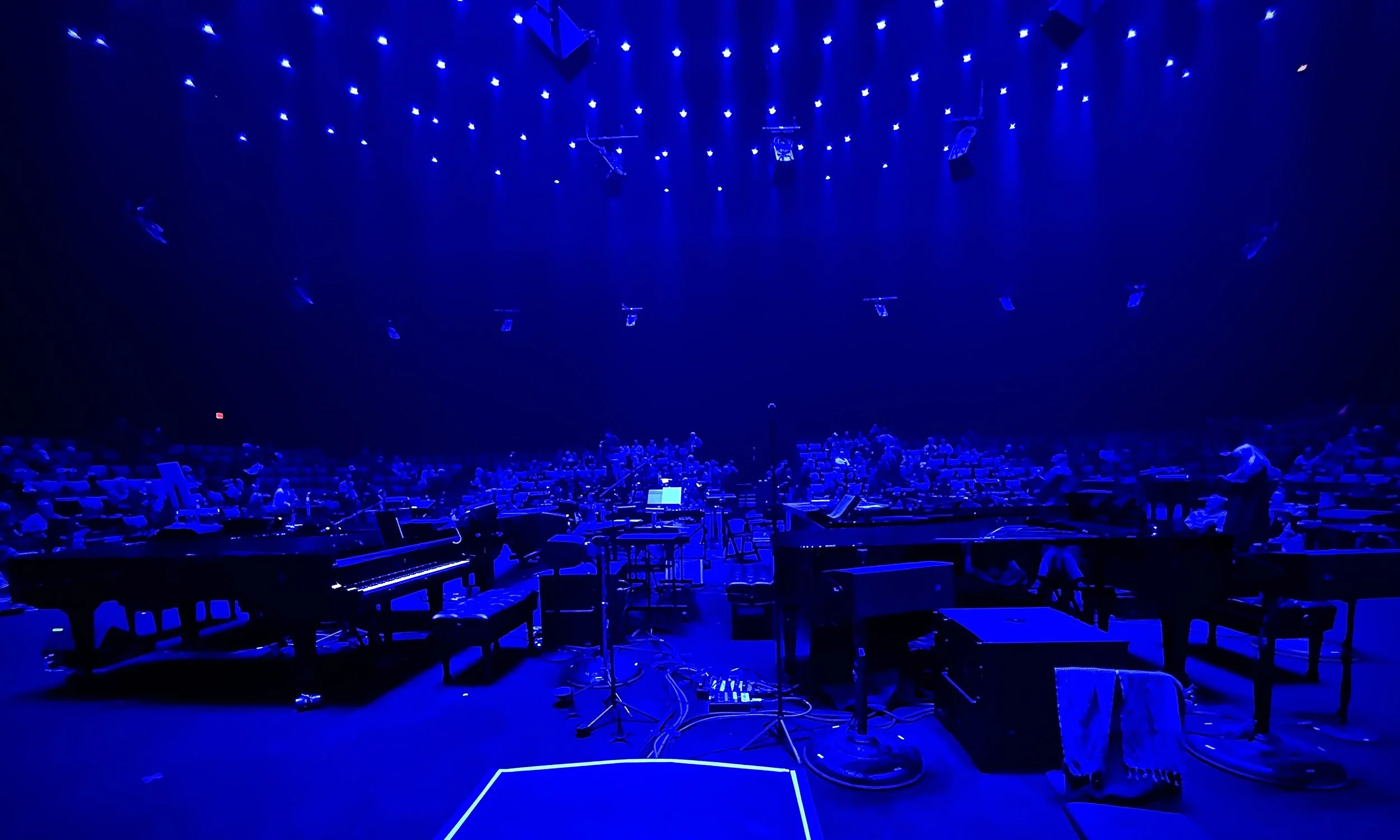
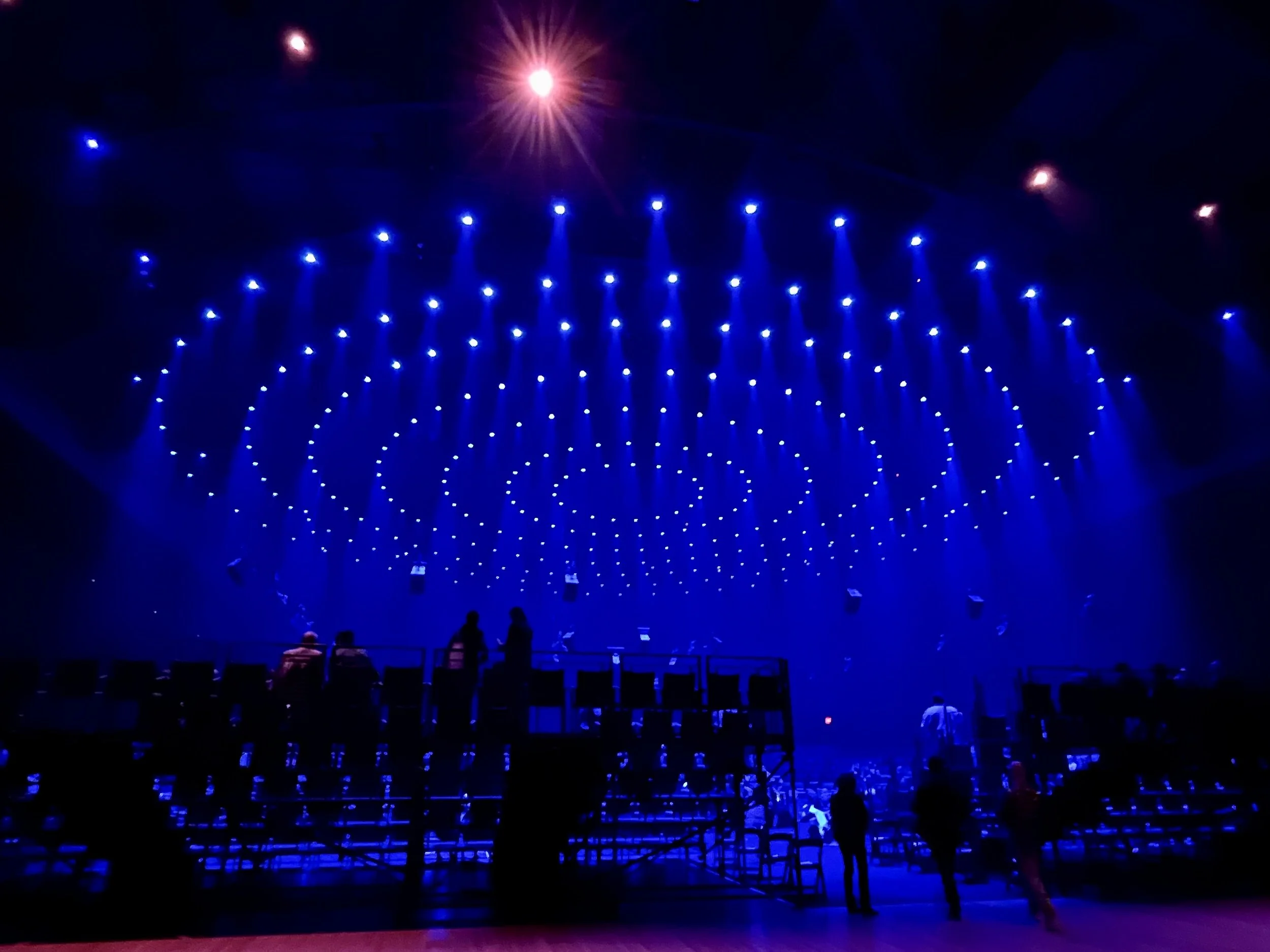
The cavernous Wade Thompson Drill Hall transformed into a meditative chamber, the site of a religious ritual, an ayahuasca tent. Beaming from above, like the lights from a hovering spaceship, a black-hole shaped constellation shifted colors imperceptibly. A cluster of Steinway Ds, contrabass marimbas, woodwinds, and microphones and speakers were orbited by more, in scatters. The audience was seated amidst the array of instruments, and became surrounded and absorbed by Reich’s hypnotic music.
Crisply garbed in white tops and black bottoms, with the cool focus of a team of sure-handed surgeons, the Steve Reich Ensemble was first to take stage. The venerable troupe that first recorded the original album on ECM New Series — described by David Bowie as “Balinese gamelan music cross-dressing as Minimalism” and “Astonishing” — returned from retirement for the occasion and now includes successful composers in their own right as Timo Andres and Caroline Shaw.
Conductor Alan Pierson conceptualized and directed Music for 18 Musicians: Staged Variations, a series of epic evenings joining Reich’s ensemble with two younger acolyte entities. Watching the Reich ensemble perform the ritual of executing this piece I was reminded of Apple TV’s Pluribus. Here, a flock of pianists, percussionists, woodwinds, strings, and vocalists perform simple repeating patterns, in phases governed by the rhythm of human breath — with the indefatigable openness, the amenable detachment, of the “Others” that are joined in a hive mind on Vince Gilligan’s Emmy-winning series.
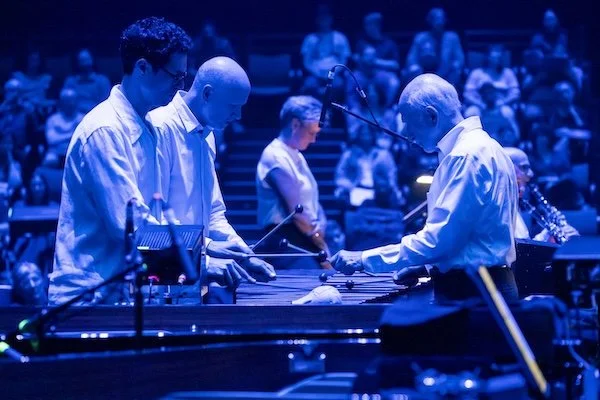
Steve Reich Ensemble, photo by Stephanie Berger.
“Musicians at Center: The Steve Reich Ensemble” segued into a devotional interlude called Viaduct featuring and composed by Shaw, while the stage setup shifted, and members of the audience in street clothes, actually Tactus, an ensemble of students and graduates of the Manhattan School of Music, emerged and began again at the pulsing beginning of the composition. “Musicians Moving,” their freshly dynamic account of Reich’s 50-year-old piece in which they flowed around the stage, surrounding seated listeners, playing directly to them and to each other, danced gently, and ultimately, lured audience members to take to the floor and get into the groove.
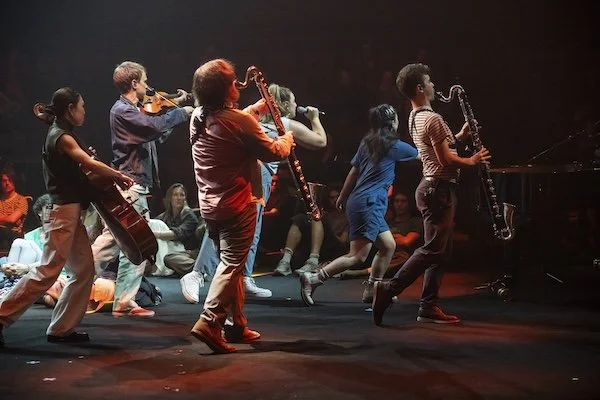
Tactus, photo by Stephanie Berger
The event’s coup de theatre, as the Reich’s tapestry of harmony shifted like a glistening kaleidoscope, percussionist Jonathan Collazo emphasized the sheer athleticism required of the musicians, playing the maracas while running laps around the stage’s circumference for a jaw-dropping length of time, without missing a shake.
Tactus’s youthful rendering of Music for 18 Musicians, with the players moving around the expansive venue, was more sensuous and fun, while a tad looser, than Reich’s own ensemble. In the third version, “Listeners at Center,” Grammy-winning Alarm Will Sound, adorned in ceremonial robes, and occasionally moving into the bleachers, surrounding the listeners, brought a third, brisker and more polished, approach to the work.