


REVIEW: Mäkelä and Royal Concertgebouw Seduce Carnegie Hall
If conducting technique was an Olympic sport, Mäkelä gave a medal-worthy performance. Perhaps the clearest conductor I have ever seen, embodying in equal parts the physicality, and spirit, of the music, he propelled the music’s rhythmic and dynamic energy into orbit, while also infusing it with emotional character. Svelte and debonair — and impeccably tailored — he does so without losing that Stokowski silhouette.

REVIEW: Virtuoso Winds at CMS
Alice Tully Hall was filled to the brim on Sunday for Chamber Music Society of Lincoln Center’s Virtuoso Winds, a jigsaw puzzle with six pieces. Six musicians combined in various duos and a trio, and eventually in a thrilling sextet, intent on the powerful possibilities and the joy of making music.

REVIEW: Adams Conducts Adams at New York Philharmonic
It has been suggested that composers shouldn’t conduct their own music. But, John Adams, whose Antony and Cleopatra will premiere at the Metropolitan Opera in the spring, disproved the theory, leading a thoroughly convincing and brilliantly played evening of mostly American twentieth- and twenty-first century compositions.

REVIEW: Pacifica Quartet's Portrait of America at 92NY
Grammy-winning Pacifica Quartet painted a monumental portrait of the United States in their recent American Snapshots: JFK, Vietnam, and Ellis Island at 92NY, indemnifying music from two of America’s darkest moments — from two of America’s worthiest twentieth century composers, Samuel Barber and George Crumb — with a symbol of its optimism and possibility, Antonín Dvořák’s “American” Quartet.

REVIEW: Mozart Unscathed Despite Erratic Performance
For Orpheus — New York’s 52-year-old democratic chamber orchestra that operates without a conductor — the answer is “no, thank you.” But, Maxim Vengerov, celebrated Soviet-Israeli violin virtuoso engaged as soloist in a two-concert survey of Mozart’s complete works for violin and orchestra at Carnegie Hall, apparently did not get the memo.

REVIEW: Junction Trio’s Impactful Debut at 92NY
The Junction Trio is more than a piano trio. The triad of violinist Stefan Jackiw, cellist Jay Campbell, and pianist Conrad Tao is a juggernaut. The threesome made an impactful debut at 92NY on Friday in a daring gambit, deploying two warhorses of the genre alongside a bit of indignant commentary in the form of a spunky world premiere.
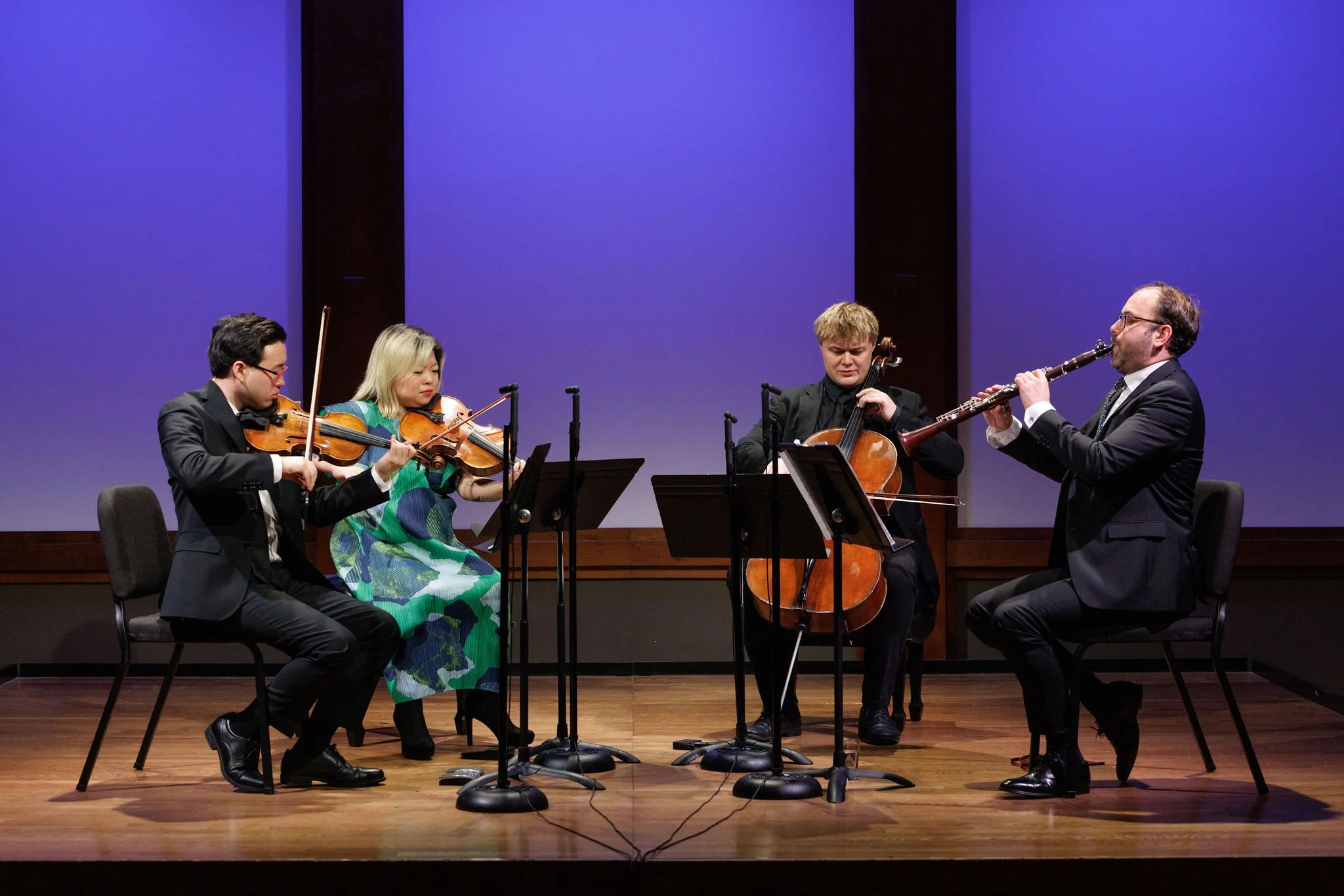
REVIEW: Hummel and Prokofiev in CMS Rose Studio
CMS invites audiences to this petite slice of heaven (the venue seats about a hundred people) for various events, from Inside Chamber Music lectures (with Bruce Adolphe) to concerts and masterclasses. Thursday’s Rose Studio Concert, hosted and curated by oboist James Austin Smith, was an enchanting, hour-long holiday.
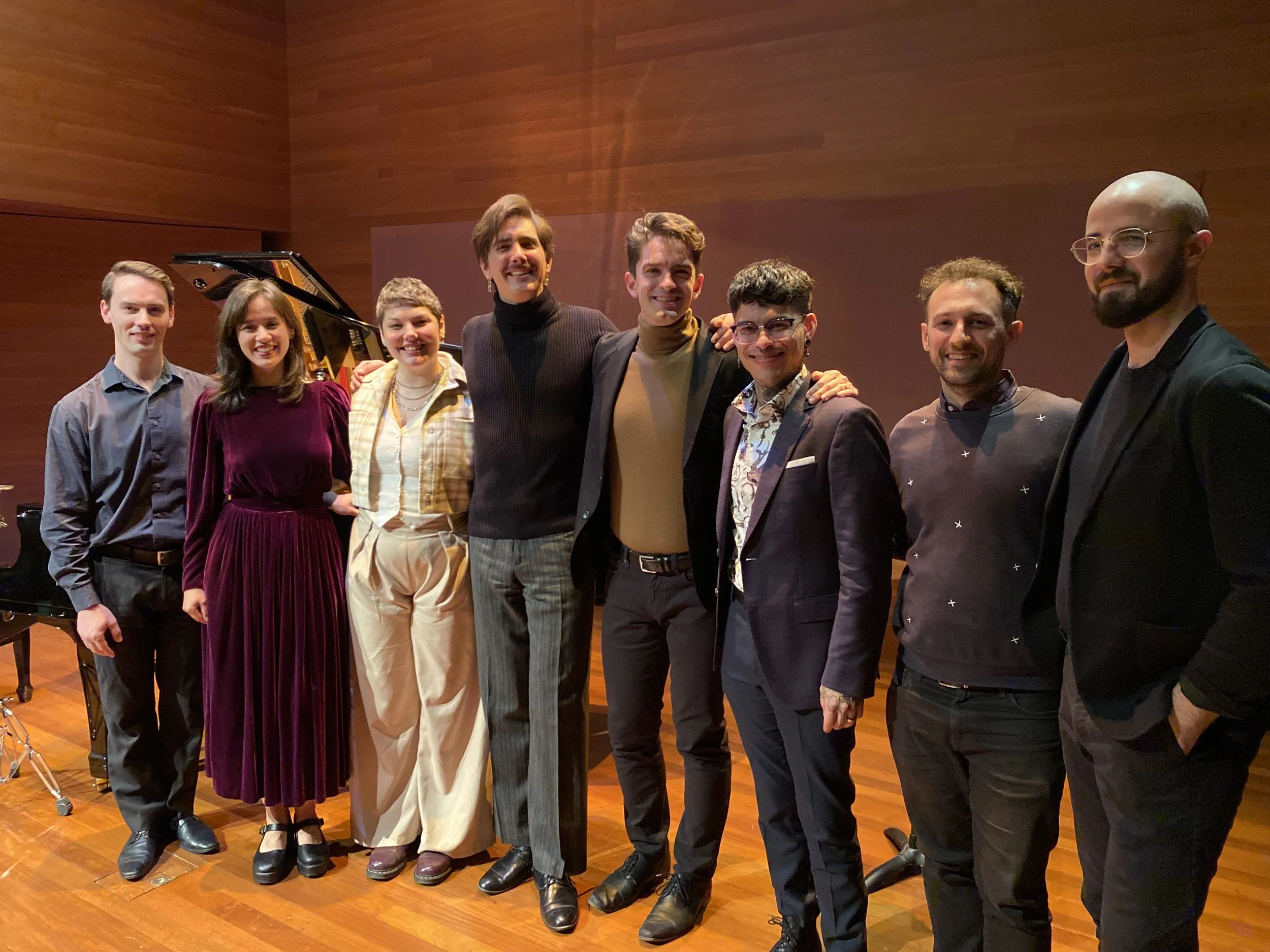
REVIEW: NYFOS Makes Space For New Music
An art song recital is the last place remaining for an audience to hear an unamplified singer in an intimate setting; as such, it always has a whiff of the 19th century about it. But NYFOS Next, the venerable New York Festival of Song’s new music series, showed in their recent program “A Space to Make” that the ancient form is alive and very much kicking in the hands of the current generation of practitioners.

REVIEW: Phantasias and Variations - Angela Hewitt Turns Focus To Mozart
Angela Hewitt — esteemed as one of today’s master interpreters of J. S. Bach, having recorded and performed the Baroque master’s complete ouvre for ten fingers to great acclaim in recent years, has embarked on her next chapter, The Mozart Odyssey, a survey of Mozart’s piano concertos around the globe. Hewitt began her latest concert in Kaufman Auditorium at 92NY with Mozart’s Phantasia, beautifully paced and technically graceful, adding her own flare to the written ornaments — as an opera in miniature.

PREVIEW: November's Classical Music in NYC
CadenzaNYC’s curated list of NYC’s classical music highlights for November 2024.

REVIEW: MasterVoices Strikes Up the Band
Someday this inflamed election season will be something to reflect upon, and one of my fondest memories of the period will be the soothing balm applied by MasterVoices’ effervescent concert presentation of Strike Up the Band, the satirical operetta from 1927 with a score by George and Ira Gershwin and an antiwar Marx Brothers-style book by George S. Kaufman.

REVIEW: The Knights Slay Beethoven's Fourth and Assorted Rhapsodies
The centennial of George Gershwin’s Rhapsody in Blue continued into its fourth quarter with The Knights’ latest at Carnegie’s Zankel Hall, featuring a world premiere as part of their multi-season Rhapsody-themed commissioning project. The Brooklyn-based orchestra welcomed pianist Aaron Diehl for a unique take on Gershwin’s familiar piece for piano and orchestra, a new composition for the same combination by Michael Schachter, balanced, in a stroke of programming ingenuity, with Beethoven’s Fourth Symphony.

REVIEW: Daniil Trifonov Waltzes Through Moody Program
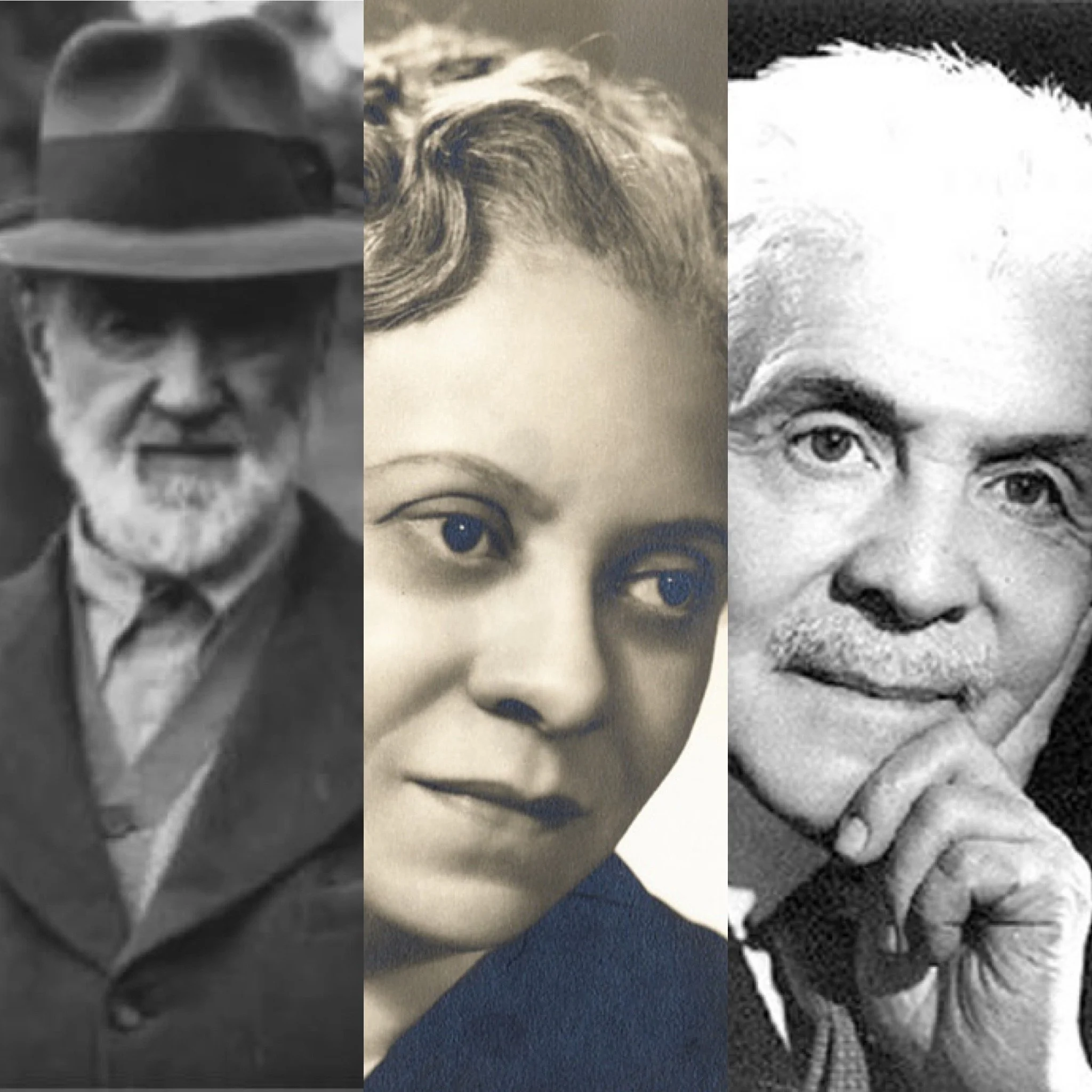
Trifonov’s swap of Barber with Rachmaninoff’s Variations on a Theme of Corelli raised the question of what story this unusual program was telling, especially, after experiencing the Sturm und Drang of the curtain-raiser. Pyotr Ilyich Tchaikovsky's Piano Sonata in C-sharp Minor, a posthumously published work, dating from 1865 when the composer was a 25 year old student, was a fascinating concert opener.

REVIEW: The Philadelphia Orchestra's Sublime Mahler's Third
Mahler’s Third, which clocked roughly an hour-and-three-quarters this evening and requires women’s chorus, children’s chorus, alto soloist, and orchestral heft including eight horns, is more seldom programmed than his Second, or Bruckner’s Seventh (a mere hour-and-ten-minutes). But, Nézet-Séguin commands this monumental epic assuredly, not wasting a drop of the legendary Philadelphia institution inherited from legendary maestros such as Stokowski and Ormandy. And Mahler’s Third is as Mahlerian as his symphonies come — a broad canvas on which he depicts and explores “nature,” and the human experience, in the broadest sense.

REVIEW: Gustavo Dudamel and Natalia Lafourcade Build Bridges With L.A. Phil
Carnegie Hall’s 2024-25 season opened with Gustavo Dudamel and the Los Angeles Philharmonic in three concerts that established a jubilant tone for the venue’s new festival, Nuestros sonidos (“Our Sounds”), which celebrates the impact of Latin-American culture on the United States.

PREVIEW: October's Classical Music in NYC
CadenzaNYC's October 2024 curated list of NYC's classical music highlights.

REVIEW: National Sawdust's "Silent Light"
Silent Light, the new, immersive opera by composer Paola Prestini and librettist Royce Vavrek, based upon the 2007 Dutch film Stellet Licht, transports us to a Northern Mexican Mennonite community in this captivating parable of love, duty, temptation, and the role of women in society.

REVIEW: Parlando's Powerful Music of Night
The nocturne and the enduring theme of night music was explored in the latest Merkin Hall performance by Parlando. Conductor Ian Niederhoffer, who founded this intrepid and promising chamber orchestra in 2019, conceived and led a packed house through an insightful and captivating rumination on the musical night-scape.