CadenzaNYC's Preview of NYC's Classical Music Highlights September 2024. Listings include Lincoln Center, New York Philharmonic, Carnegie Hall, Met Opera, and other leading venues in Manhattan, Brooklyn, and more.

CadenzaNYC's Preview of NYC's Classical Music Highlights September 2024. Listings include Lincoln Center, New York Philharmonic, Carnegie Hall, Met Opera, and other leading venues in Manhattan, Brooklyn, and more.
The Sylvan Winds concluded their forty-fifth season as one of New York’s premiere woodwind quintets with a convivial, festive concert at Merkin Concert Hall. Joined by a mixture of friends and former ensemble members, the evening featured fresh new works, as well as beloved classics, and expanded into veritable wind ensemble works with thirteen players. A “baker’s duodecet?”
The salon-like ambiance was ideal for Beethoven at his most Schubertian: Piano Sonata No. 27 in E Minor, Op. 90, a two-movement piece from the composer’s “late-middle” (or some could argue, “early-late”) period. Far from the bombast of the Appasionata, the first movement of Op. 90, “Lively, with feeling and expression throughout,” finds the composer turning inward, examining — through an expansive sense of melody that points the way not only for Schubert, but Romantic composers in general — the dichotomies of existence, the positive and negative implications of each musical germ. And by the second movement, a lilting rondo “To be played no too fast and very songfully,” it was clear that melody — not only Kissin’s plush, versatile voicing in the keys, but his free flowing eloquence in sculpting and shaping phrases — was the star of this show.
AIt was a difficult opera to watch. As Danny Chen, Brian Vu’s powerful lyric tenor is as steely as it is plush, and he delivered a brave, stoic performance that haunted the courtroom proceedings, shared lighter scenes with hints of romance with the earnest and clear mezzo-soprano Hannah Cho, and endured unconscionable, racially-motivated violence.
This was the third and final concert of The Knights’ residency at Zankel Hall this year, and Heirloom, of which the orchestra was a co-commissioner, was receiving its pandemic-delayed New York premiere. Heirlooms is a three-movement work on themes of intergenerational inheritance, with one movement based on the entangling of Gabriel Kahane’s parents’ musical lives and his own, one on his grandmother’s post-war feelings about German music, and the third on the unknowable question of what his children will inherit from him.
Mozart’s Symphony No. 41 in C Major, K. 551 is a force of nature, a masterpiece that seems an integral fabric of our musical galaxy, (if you were born after 1788). Like the weather and the sky, it continues to surprise and awe. Known better by its moniker Jupiter, the piece formed the nucleus of the final concert of American Classical Orchestra’s 39th season. Winkingly united under the theme Astronomical, Thomas Crawford led his venerable period instrument orchestra in an evening of selections that brought telescopic perspective to the orbital trajectories, the half-lives, of musical compositions.
Powerful stories of humanity enduring oppression and turmoil took the form of epic soundscapes in Chamber Music Society of Lincoln Center’s Songs and Snow, a luxurious performance of two works by composers who march to the beat of their own drums, while sharing an Ives-ian, pan-musical palette: recently departed George Crumb and Chinese-born Tan Dun.
CadenzaNYC’s curated highlights of NYC’s classical music events for May 2024
In the United States, if we think of the accordion at all, we are likely to have images of polka bands, French ballads, or Lawrence Welk. Perhaps we remember the Far Side cartoon whose top caption reads “Welcome to heaven, here’s your harp,” followed by “Welcome to hell, here’s your accordion.”
“Yessssss…you may applaud,” winked Kim David Smith, following his breathless opening set as Master of Ceremonies of Tiergarten, the monumental, immersive cabaret experience being staged in The Great Hall under the Church of St. Mary on the Lower East Side. One of the strongest entries in Carnegie Hall’s season-long festival examining the Weimar Republic, Tiergarten is a spectacular convergence of art and entertainment.
The Orchestra Now visited the Metropolitan Museum of Art on Sunday for an exploration of Sight & Sound: William Grant Still & and the Harlem Renaissance. Tying in with the Met Museum’s current exhibition, The Harlem Renaissance and Transatlantic Modernism, Leon Botstein and Bard University’s graduate orchestra, which draws talented student musicians from around the world, delivered an invigorating performance of the seldom heard second symphony of this little understood composer.
…a program entirely of Schubert, no matter the genre, skirts a slippery slope to slumber. But, even the drowsiest listener would have been captivated by the refinement of artistry on display when Mitsuko Uchida and Jonathan Biss — co-artistic directors of the Marlboro Music Festival, and both distinguished interpreters of this literature.
One of the more interesting and varied concerts of the season, Chamber Music Society of Lincoln Center filled Sunday afternoon with a program of “musical tales” spanning two centuries of music and multiple disciplines, too. Tamara Mumford, assured and elegant, with the Cadillac of instruments, brought impeccable French diction, operatic poise, and accurate rhythm to Ravel’s art song settings of de Parny’s erotic and anti-colonial/anti-slavery poetry.
Karina Canellakis, in her New York Philharmonic debut, conducted a heady, challenging program this past week at David Geffen Hall. If there was a unifying theme in the four works, it might have been a Rashamon-like exploration of the various paths Western music took from the beginning of the Fin de Siècle to the Roaring Twenties.
The Orion String Quartet made their exit, retiring from the concert stage after 36 years as a distinguished ensemble. Associated with Chamber Music Society of Lincoln Center for more than 30 years, their makeup unchanged for as long, and their warmly received final performance was a coveted ticket on CMS’s calendar.
CadenzaNYC’s Curated List of NYC’s Classical Music highlights for the month of April 2024.
If the name Schoenberg brings a Pavlovian wince — a brush with the results of his innovative, atonal twelve-tone technique having left a bitter taste in your mouth — then you would not have been prepared for the plush warmth of the opening Orchestral Prelude. This game-changing composer spanned two epochs; Gurre-Lieder is a monument to his beginnings. Like Mahler and Strauss, he stretched late-Romanticism to its extremes, wrenching every drop from Western musical tropes until the music overgrew and sprawled, about to spill out of its container of traditional tonal harmony.
As Jaap van Zweden’s term as New York Philharmonic’s Music Director enters its home stretch, the combination of a lithe orchestra, energetic conductor, adventurous soloist, and perfectly balanced programming made for the platonic ideal of the symphonic concert. Felix Mendelssohn’s The Hebrides Overture, Op. 26, a brooding tone painting (in F# Minor), followed by the journeying Mozart Piano Concerto No. 17 (in G Major), capped by the hard-earned arrival of C Major in Beethoven’s iconic Fifth Symphony .
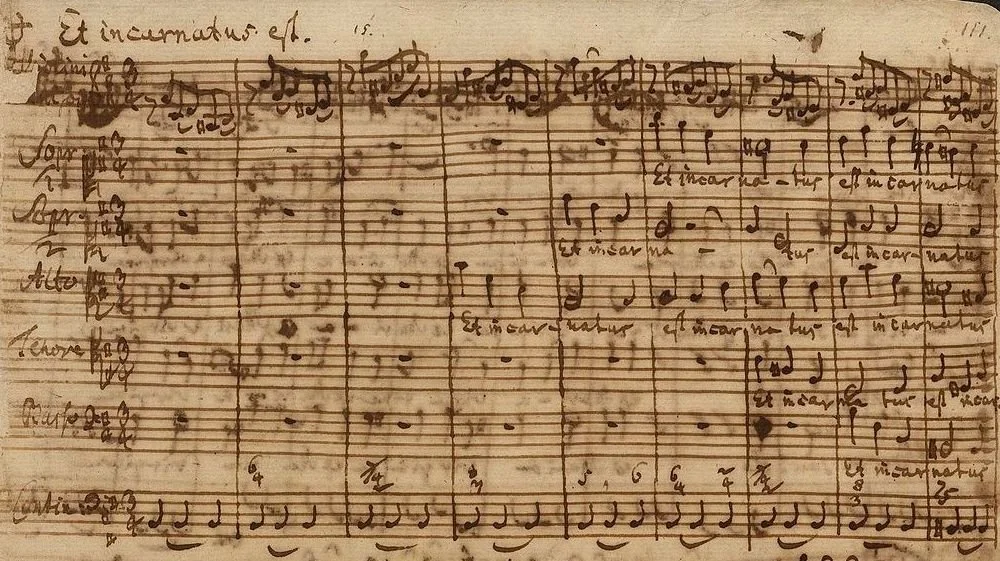
The American Classical Orchestra filled the pews of Alice Tully Hall with an enthusiastic congregation eager to submit to the religious experience that is J. S. Bach’s Mass in B-Minor, BWV 232. This massive (no pun intended) liturgical choral and orchestral work featuring five vocal soloists — towering masterpiece of the Baroque era — received a buoyant performance by Thomas Crawford’s period-instrument orchestra and fine collection of singers.
New York City and Montréal communed in midtown Manhattan on Wednesday night when Orchestre Métropolitain de Montréal concluded their second US tour, under the baton of their maestro of 25 years, Yannick Nézet-Séguin. C'était magnifique.