CadenzaNYC’s Curated List of NYC’s Classical Music highlights for the month of April 2024.
CadenzaNYC’s Curated List of NYC’s Classical Music highlights for the month of April 2024.
If the name Schoenberg brings a Pavlovian wince — a brush with the results of his innovative, atonal twelve-tone technique having left a bitter taste in your mouth — then you would not have been prepared for the plush warmth of the opening Orchestral Prelude. This game-changing composer spanned two epochs; Gurre-Lieder is a monument to his beginnings. Like Mahler and Strauss, he stretched late-Romanticism to its extremes, wrenching every drop from Western musical tropes until the music overgrew and sprawled, about to spill out of its container of traditional tonal harmony.
As Jaap van Zweden’s term as New York Philharmonic’s Music Director enters its home stretch, the combination of a lithe orchestra, energetic conductor, adventurous soloist, and perfectly balanced programming made for the platonic ideal of the symphonic concert. Felix Mendelssohn’s The Hebrides Overture, Op. 26, a brooding tone painting (in F# Minor), followed by the journeying Mozart Piano Concerto No. 17 (in G Major), capped by the hard-earned arrival of C Major in Beethoven’s iconic Fifth Symphony .
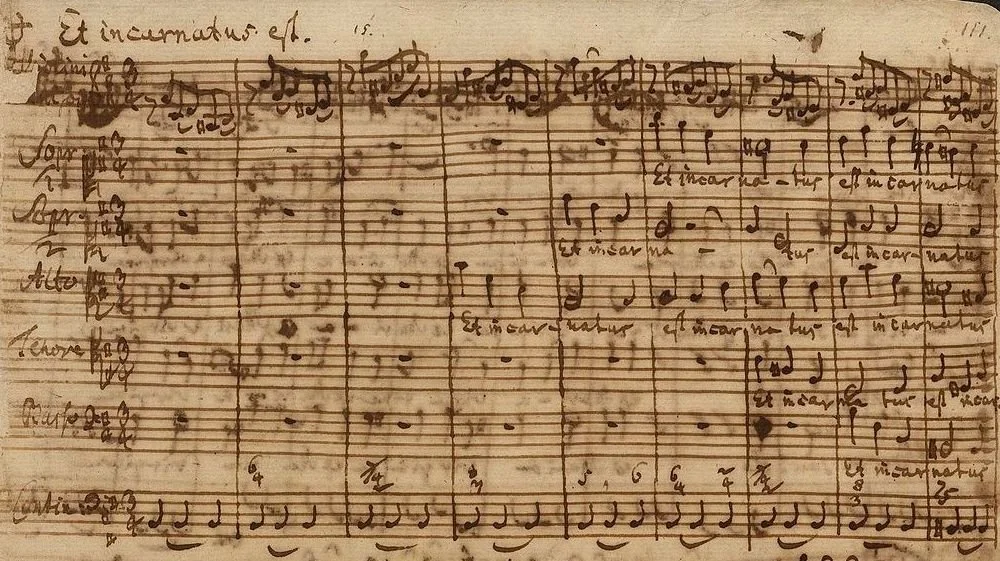
The American Classical Orchestra filled the pews of Alice Tully Hall with an enthusiastic congregation eager to submit to the religious experience that is J. S. Bach’s Mass in B-Minor, BWV 232. This massive (no pun intended) liturgical choral and orchestral work featuring five vocal soloists — towering masterpiece of the Baroque era — received a buoyant performance by Thomas Crawford’s period-instrument orchestra and fine collection of singers.
New York City and Montréal communed in midtown Manhattan on Wednesday night when Orchestre Métropolitain de Montréal concluded their second US tour, under the baton of their maestro of 25 years, Yannick Nézet-Séguin. C'était magnifique.
All of this music is in the DNA of the Vienna Philharmonic, and to hear them play it is to better understand what it is about: expression. Their timbre is bright, their pitch is heightened, and their tremolos wide and dug in. But, what really comes through is the sheer joy each player exudes through their playing. This is a fearless orchestra. They go for broke.
The evening's highlight was also its big-ticket item, the world premiere of Ears of the Book, a concerto for pipa and orchestra by Pulitzer Prize-winning composer Du Yun, written for the pipa's most visible ambassador, Wu Man. Divided into ten continuous movements called "Polaroids," the piece purports to depict "moments frozen in time," with the pipa soloist as narrator.
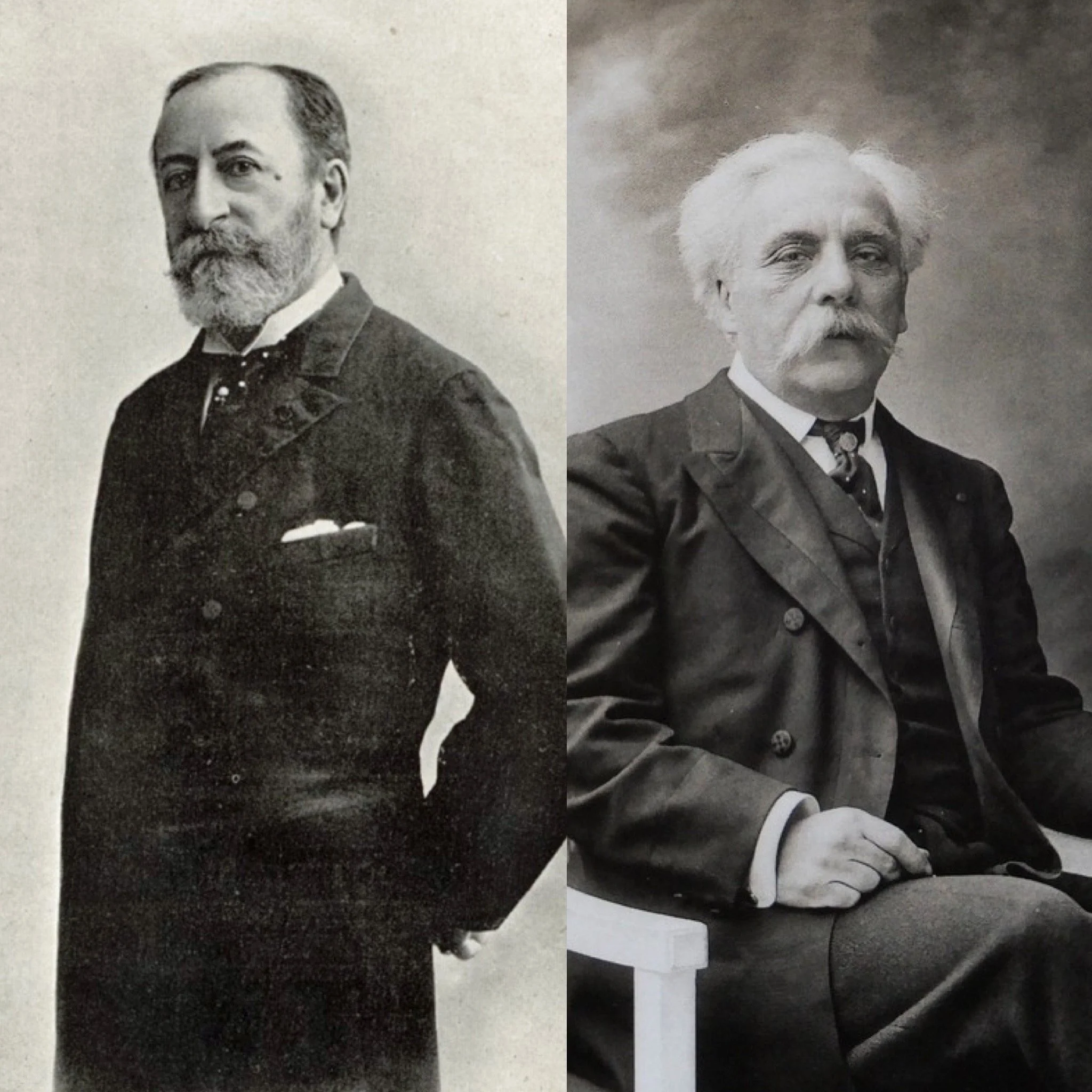
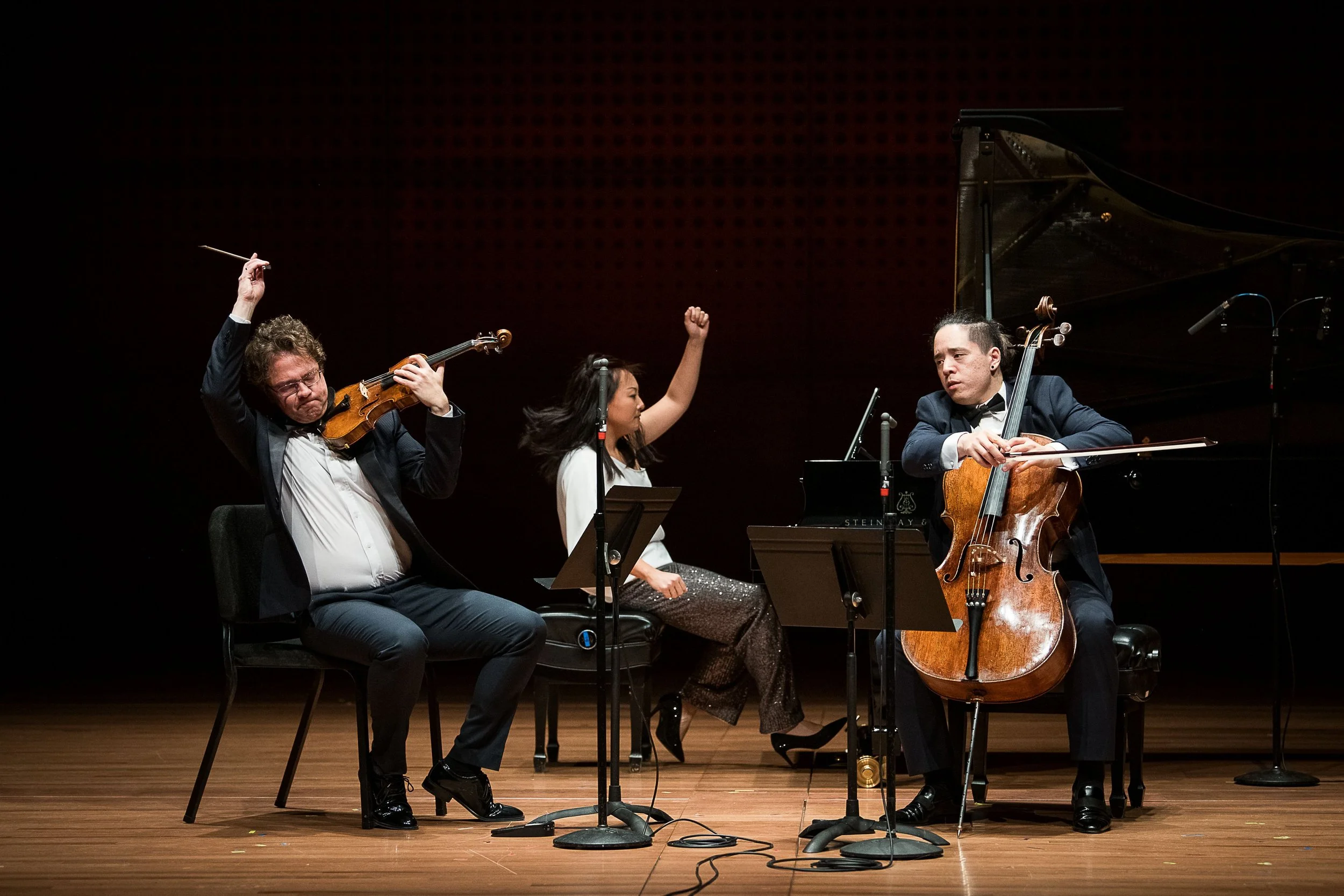
Chamber Music Society’s recent concert focusing on the composers Camille Saint-Saëns and Gabriel Fauré — lifelong friends and colleagues — was a time-traveler’s feast. The menu was a deftly curated series of these French doyens’ most rewarding and characteristic recipes.
In the presence of a master, you think about ancestors and legacies — what you might call “ghosts.” The audience in Carnegie Hall understood what John Williams meant as he greeted this “iconic room,” with the Philadelphia Orchestra, and the “ghosts within the walls that fly around and sing and dance.”
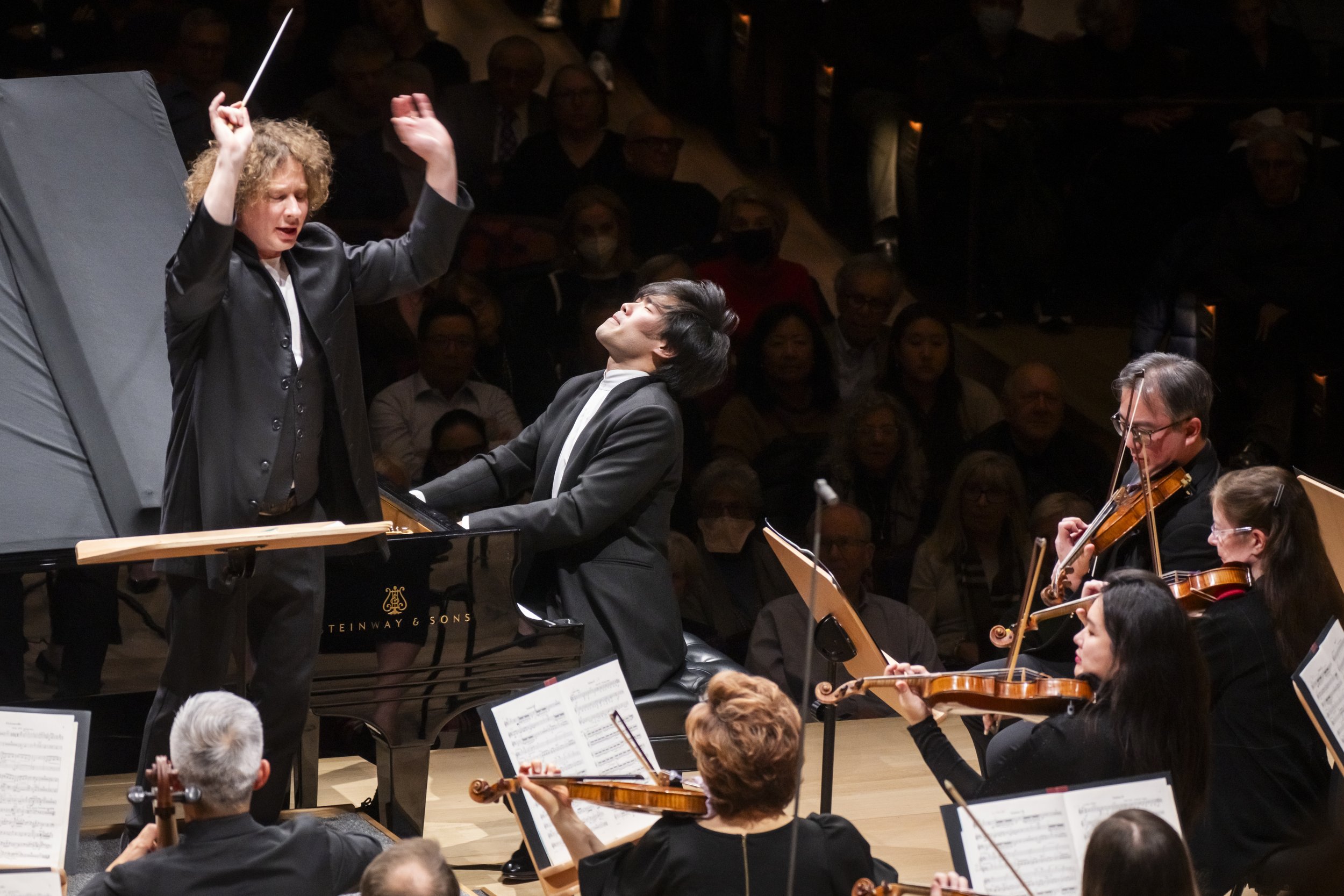
“Hush!” The ladies seated near me in the audience of Geffen Hall were being shushed by the row in front of them. They were chattily swooning in admiration of pianist Bruce Liu, making his New York Philharmonic debut in Rachmaninov’s Rhapsody on a Theme of Paganini, as he began his second encore of the night (a transcription of Bach). A rarely performed overture by Louise Farrenc and Dvorak’s Seventh Symphony completed the evening.
The pianists’ niche musical partnership proved an ambitious force of nature in this serious and sensuous program. From Schubert’s Fantasie in F Minor, classic of the genre, to Stravinsky’s The Rite of Spring, the pair invited the audience into their world, sharing a performance that was sharply accurate, gracefully manicured, impressively athletic, and artistically probing.
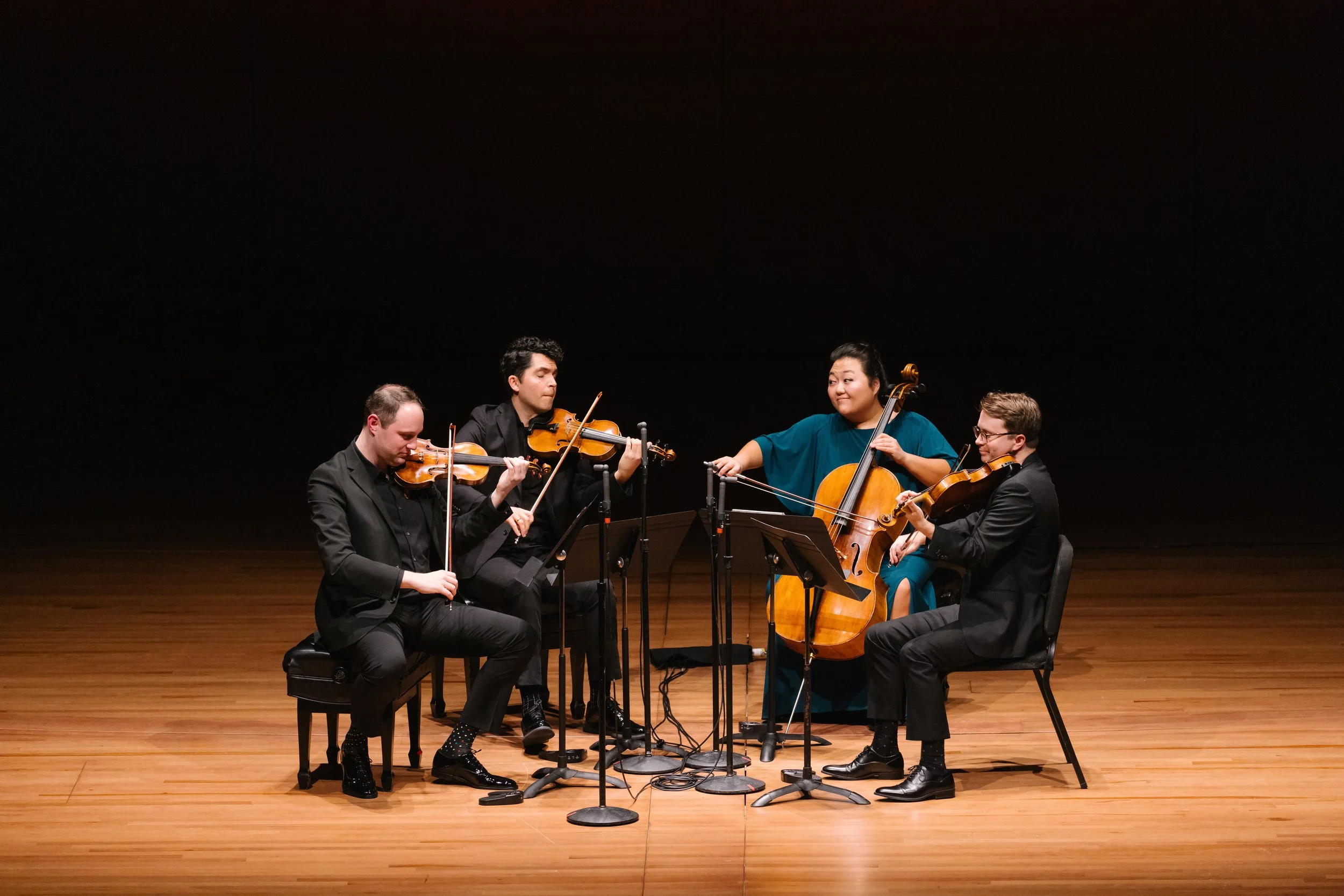
Chamber Music Society of Lincoln Center explored the essence of French chamber music over the centuries in Sacred and Profane, circulating flute and stings, harp and piano, with a touch of French Baroque, a taste of 1950s modernism, and a healthy dose of early 20th-century favorites by Debussy and Ravel.
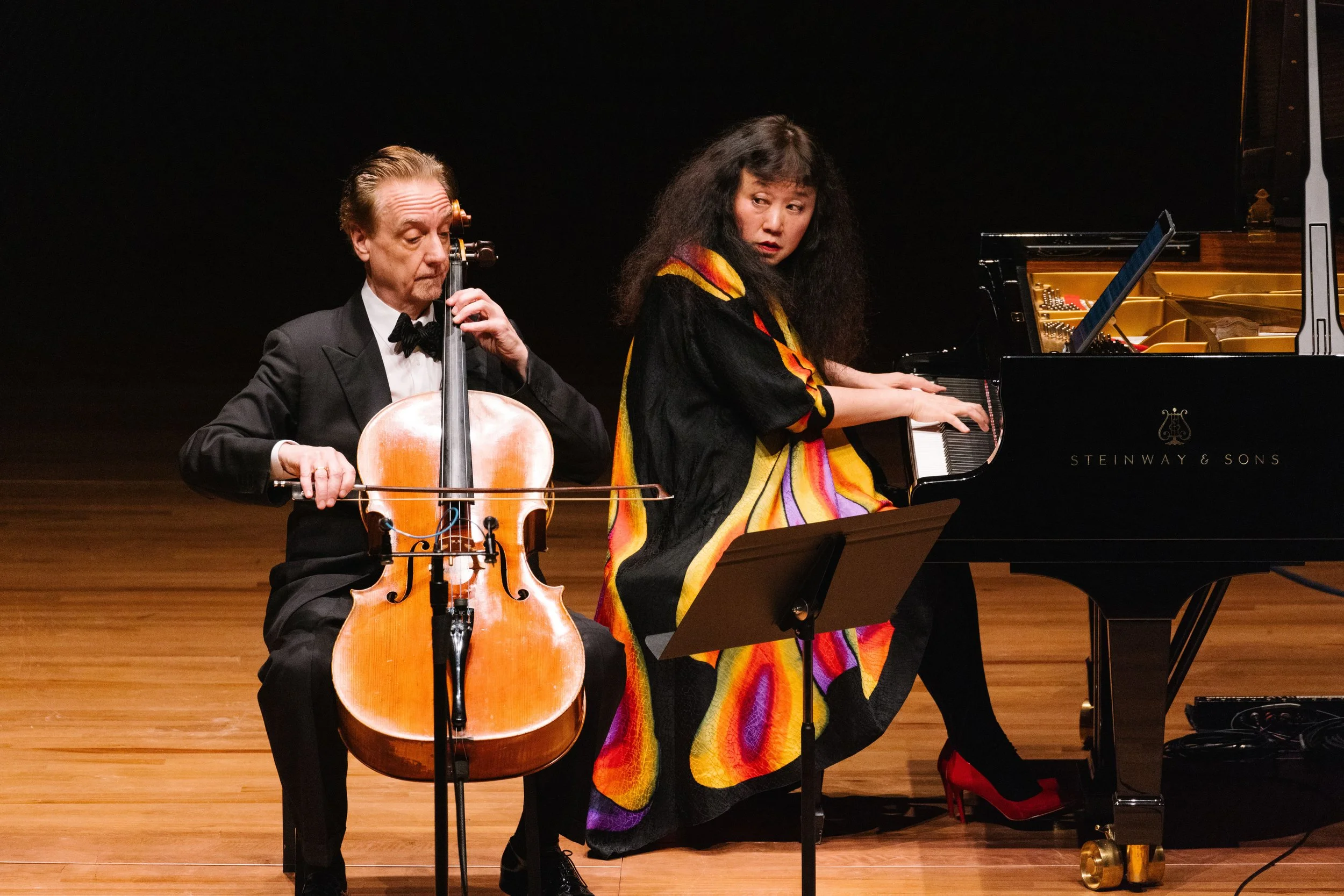
Artistic directors of Chamber Music Society of Lincoln Center, cellist David Finckel and pianist Wu Han, manifest what chamber music is all about. Their connection and mutuality was apparent as they revisited the first work commissioned for them as a duo, Bruce Adolphe’s Couple for cello and piano, buttressed insightfully by two emotionally challenging sonatas by Debussy and Shostakovich.
If music is either Song or Dance, Inon Barnatan’s solo recital at the 92NY Kaufman Hall — a full-throated essay the pianist called Symphonic Dances — teetered on the border between them, and proved that greatness lies in the balance between them.
CadenzaNYC’s February 2024 Classical Music Guide to New York City. What’s Playing on concert stages across the city this February.
Antonin Dvořák’s long neglected Requiem, Op. 89, received a rare performance at Carnegie Hall, courtesy of the American Symphony Orchestra under the baton of Leon Botstein. Featuring the Bard Festival Chorale, and a quartet of superb vocal soloists, these sizable and expert forces made a strong case for this grand Requiem mass to be rescued from the shadows of the warhorses by Mozart and Verdi, and for that matter, the composer’s own Stabat Mater.
The Cleveland Orchestra, in the second of two concerts as part of Carnegie Hall’s festival Fall of the Weimar Republic: Dancing on the Precipice, revived this avant garde masterpiece, contrasted ingeniously with Anton Webern’s 1928 Symphonie, Op. 21. Composed under threatening political scrutiny under Stalin’s regime, yet during a period when he cleverly evolved a language that defied obvious interpretation, the Fifth Symphony is one of Prokofiev’s most gratifying creations. Welser-Möst’s generous and thoughtful rendering brought New York’s audience to its feet.
Kaufman Music Center’s Merkin Hall fell under the charm of Elia Cecino, an Italian pianist of prodigious virtuosity, at Tuesday’s matinee, witnessing his auspicious New York debut. In a rich program, at once searching and revealing, Cecino carved a distinctive niche on the concert stage. At the precocious age of twenty-two, Cecino embodies the archetype of young hero — teeming with desire and ambition — but also an old soul, wise beyond his years.